Do you build video call shopping apps?
Yes. Video call shopping (also called one-to-one video shopping, virtual shopping appointments or video-assisted selling) lets a shopper book a slot or tap a button on a product page, join a WebRTC or Agora video call with a store assistant who shows the product on camera, and have items added to their cart and paid for during the call. We build it as a module for an existing ecommerce website or app (indicatively ₹3–8 lakh, 5–8 weeks) or as part of a live commerce platform, on the video stack that runs in our own product, Local Friends, and in our video calling app work.
Can you add video shopping to our existing ecommerce website?
Yes. As video shopping ecommerce website developers we add shoppable product videos (tap a product in the video to add it to the cart), a Shop on video call button on product and category pages, assistant queues and schedules, screen sharing of the catalogue, in-call cart and checkout, and recordings for dispute handling to a Shopify, WooCommerce, Magento or custom store, without replacing your catalogue or payments.
What is the difference between live commerce and video call shopping?
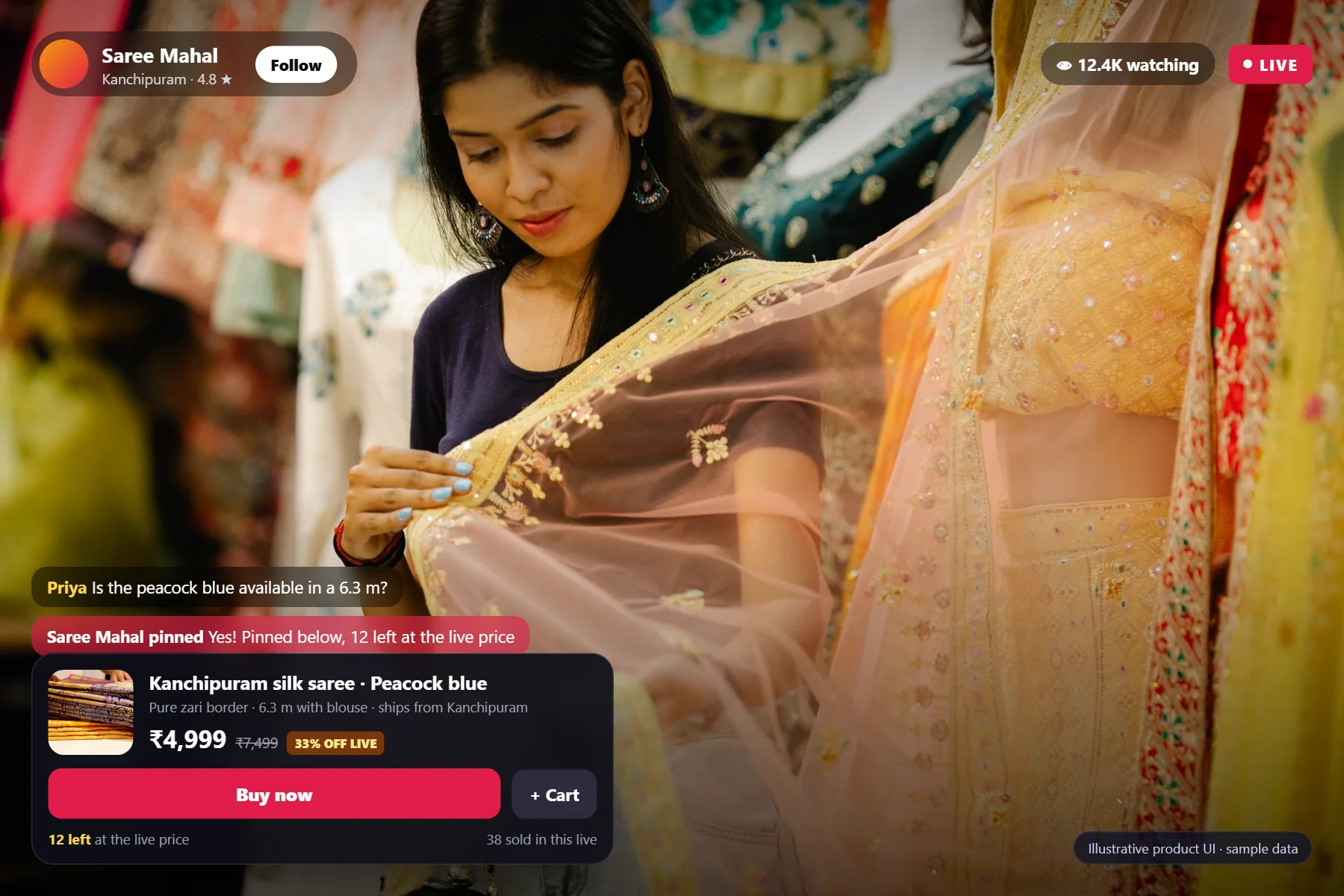
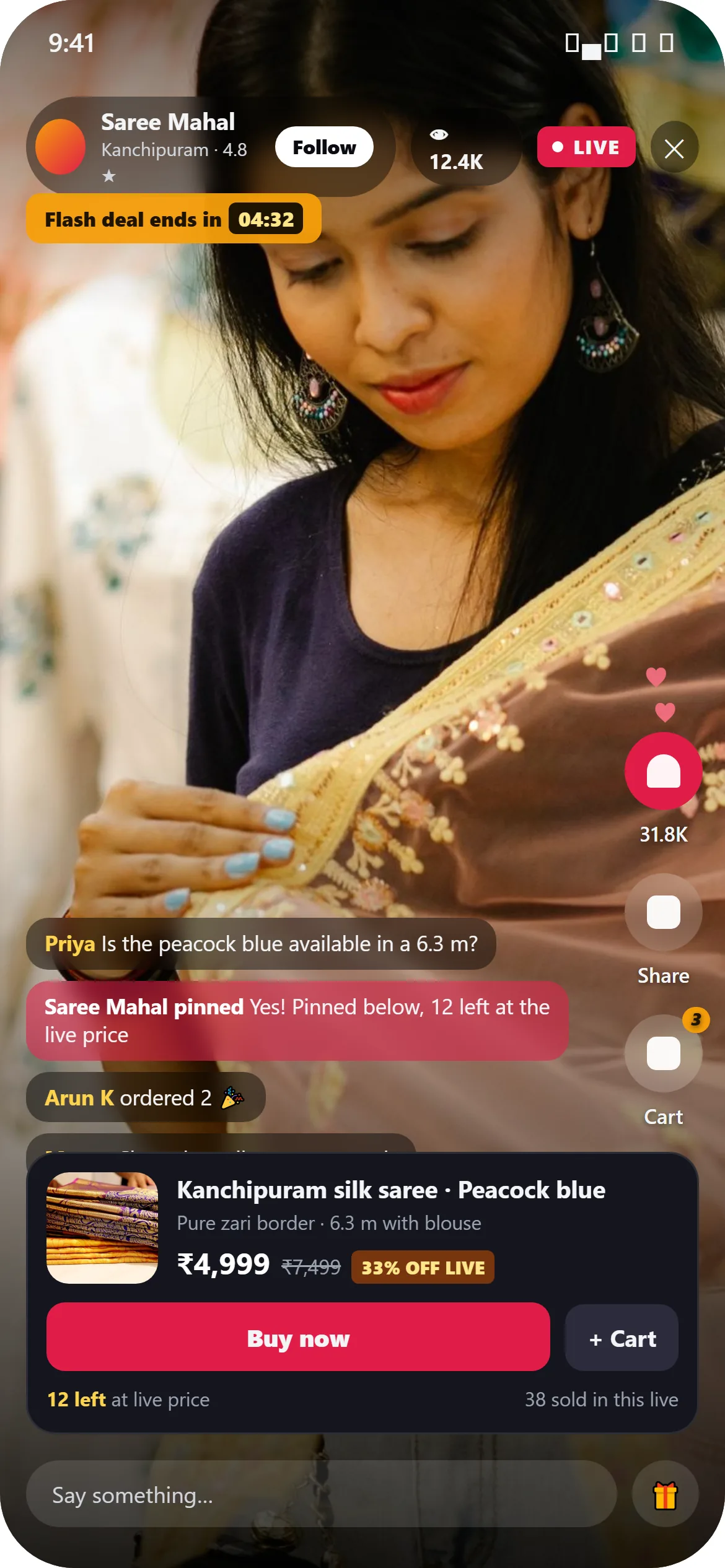
Live commerce is one seller to many viewers: a scheduled live with pinned products, chat and flash deals, suited to launches and catalogue drops. Video call shopping is one assistant to one shopper (or a small group): a private video call for high-value or high-touch products such as jewellery, sarees, furniture, electronics and property, with the assistant adding items to that shopper's cart. Most platforms we scope use both: lives for reach, video calls for conversion.
What is a multi-vendor live commerce platform?
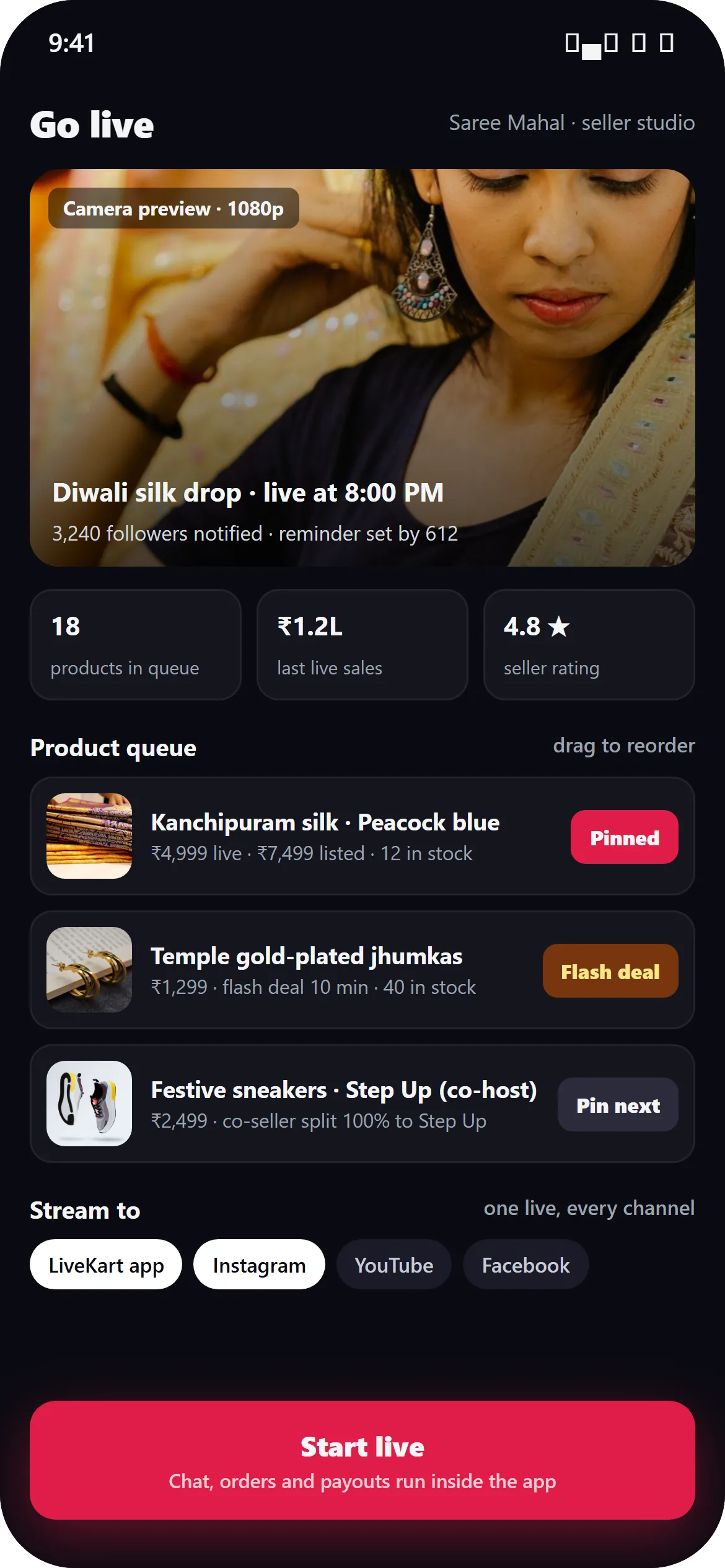
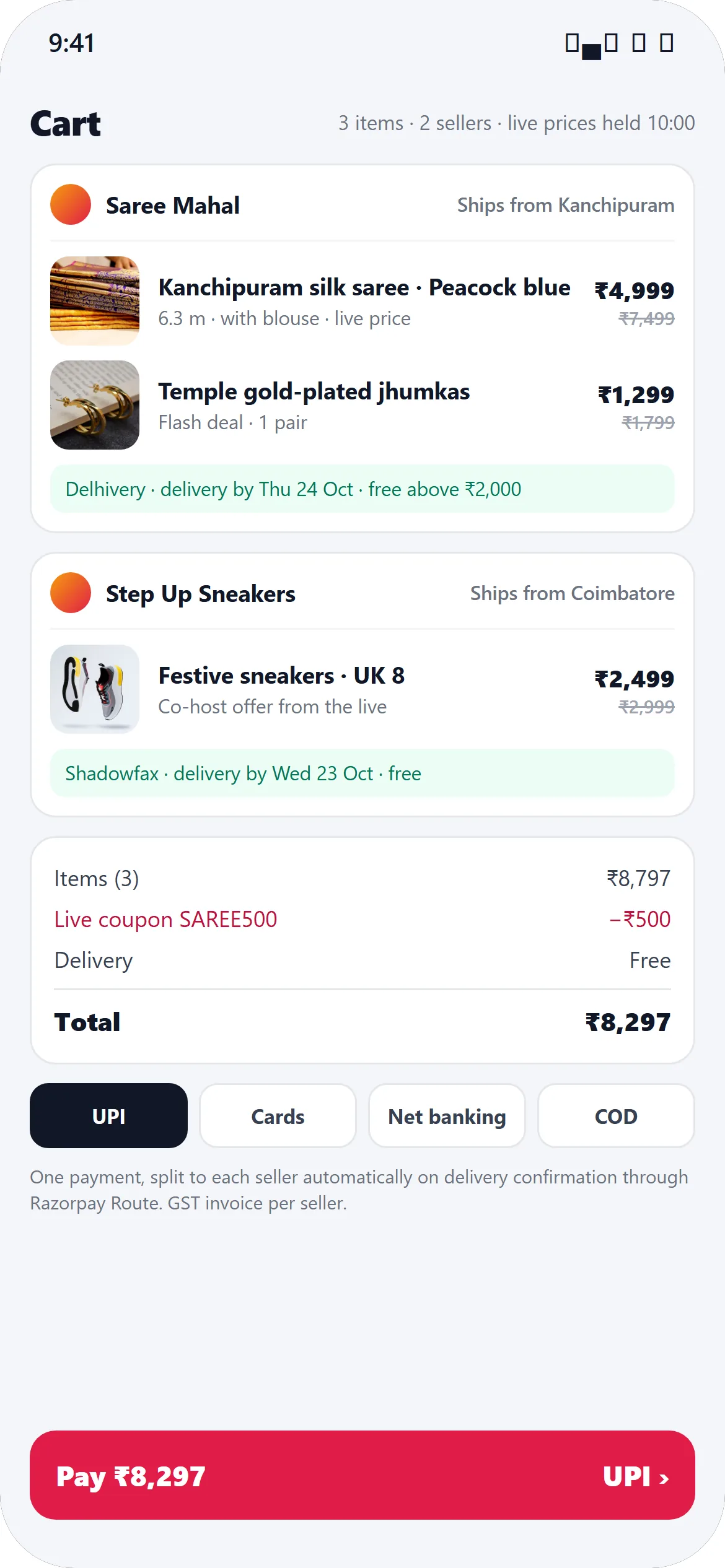
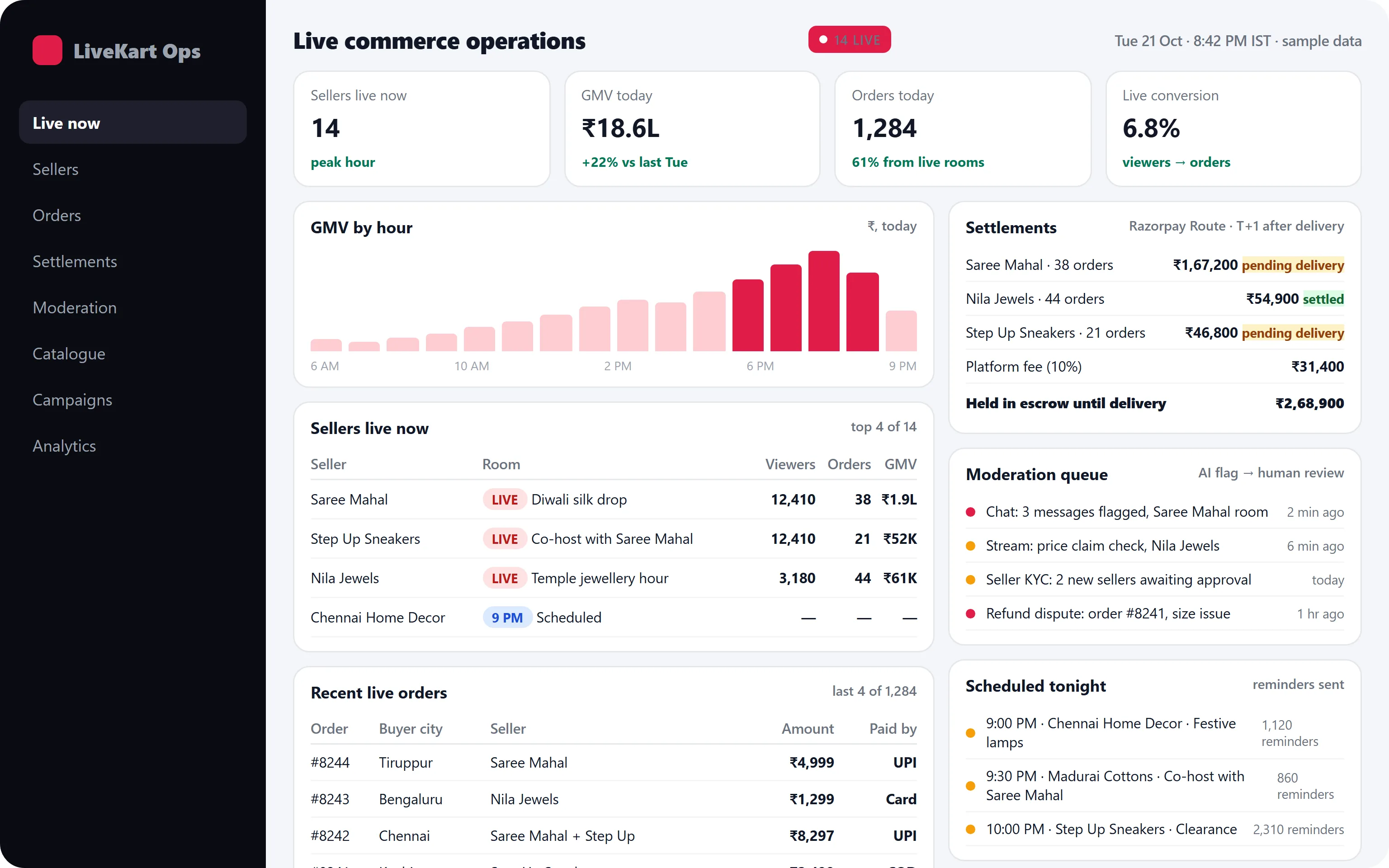
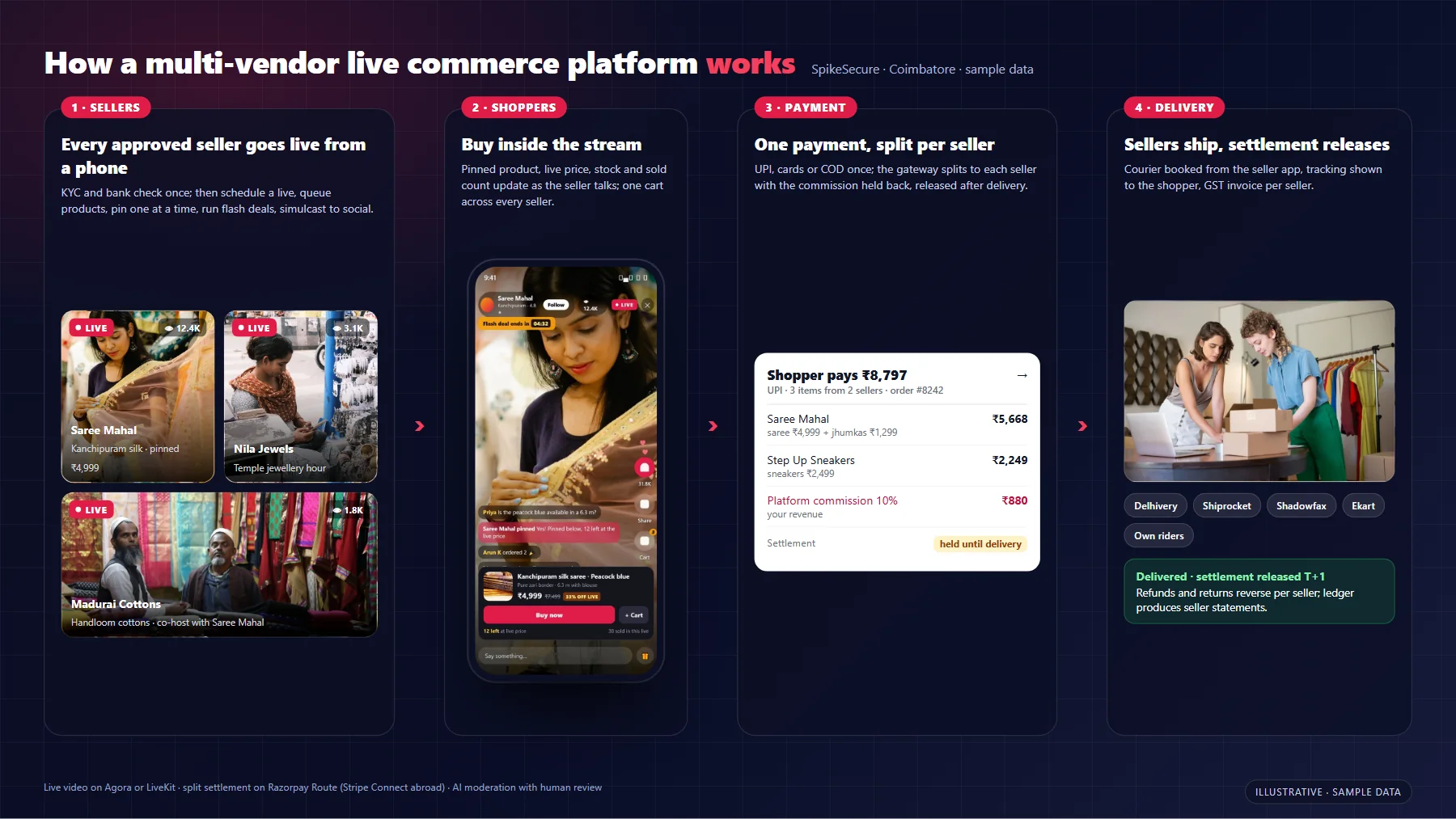
A marketplace where approved sellers stream live from their phones, pin products at live prices while they talk, and take orders inside the stream, and where shoppers keep one cart across sellers, pay once and have each seller paid their share after delivery. It combines a multi-vendor marketplace (catalogue, cart, split settlement, logistics) with a live streaming app (low-latency video, chat, moderation), which is why we build it from the WeaveHub and Local Friends modules.
How much does a multi-vendor live commerce platform cost in India?
Indicatively ₹12–25 lakh for an MVP with seller onboarding, live rooms, multi-vendor checkout, split settlement and a console, ₹25–45 lakh for a full platform with co-host lives, coupons, AI moderation, recommendations and seller statements, from ₹45 lakh for a white-label or multi-tenant product, and ₹4–10 lakh to add live rooms to an existing store or marketplace. The written quote fixes the price.
How long does it take to launch?
An MVP reaches store-ready builds in 12–16 weeks, a full platform in 18–28 weeks and a module in an existing app in 6–10 weeks, with gateway and courier sandboxes connected from week two and a seller pilot before the public launch.
How are payments split between sellers?
The shopper pays once through Razorpay, PayU or Cashfree; Razorpay Route (or Stripe Connect abroad) splits the amount to each seller's linked account with your commission held back, settlement is released after delivery confirmation, refunds are reversed per seller and a ledger produces statements and GST invoices. WeaveHub runs this way today.
Can sellers stream to Instagram or YouTube at the same time?
Yes. The seller studio simulcasts one live to the app and to Instagram, YouTube or Facebook; the pinned product, cart and checkout stay in your app, so every order is yours to settle and the viewer on social is deep-linked into the live room.
Which live video technology do you use?
Agora or LiveKit for the low-latency room, chosen with you by audience size and cost per minute, with WebRTC for co-host lives and HLS replays on a CDN that keep the product timeline. Local Friends runs live audio and video on Agora in production.
How do you handle moderation and seller trust?
Sellers pass KYC and bank verification before their first live; AI moderation (Hive and Whisper, the pipeline on Local Friends) flags video frames, chat and price claims for a human review queue; ratings, returns and disputes are handled per seller in the app, and Consumer Protection (E-Commerce) Rules details are displayed, scoped with your counsel.
Does it work with my existing Shopify or WooCommerce store?
Yes. The live commerce module adds live rooms, pinned products, chat and flash deals to a Shopify, WooCommerce, Magento or custom store on its existing catalogue, cart and payments in 6–10 weeks; the multi-vendor version adds seller onboarding and split settlement on top.
Which Indian cities do you serve?
Coimbatore, Chennai, Tiruppur, Erode, Salem and Madurai in person, and Bengaluru, Kochi, Hyderabad, Mumbai, Pune, Delhi NCR, Kolkata, Ahmedabad, Jaipur and the rest of India remotely with weekly demos and an on-site kick-off on request. We have one office, in Coimbatore, and no city branches.
Do you build live commerce platforms for clients outside India?
Yes, remotely from Coimbatore with Stripe Connect or the regional gateway for split payments, local couriers and invoicing in your currency. Dedicated pages: Singapore, USA, UK, Australia, Canada, Malaysia, Vietnam, Ghana, Jordan, UAE, Qatar, Saudi Arabia, Kuwait, Oman.
Have you built a live commerce marketplace before?
We have built and operate the modules it is made of: WeaveHub (multi-vendor marketplace with Razorpay Route split payments and KYC onboarding) and Local Friends (live video, wallet, payouts and moderation). We have not yet published a live commerce marketplace client by name, and we would rather say so than imply otherwise.
Who owns the code and the data?
You do. Source code goes into a GitHub organisation in your name; gateway, courier, cloud, store and messaging accounts are yours from day one; seller and shopper data sit in your own databases, and the intellectual property in the delivered work is assigned to you on payment.